
Introduction
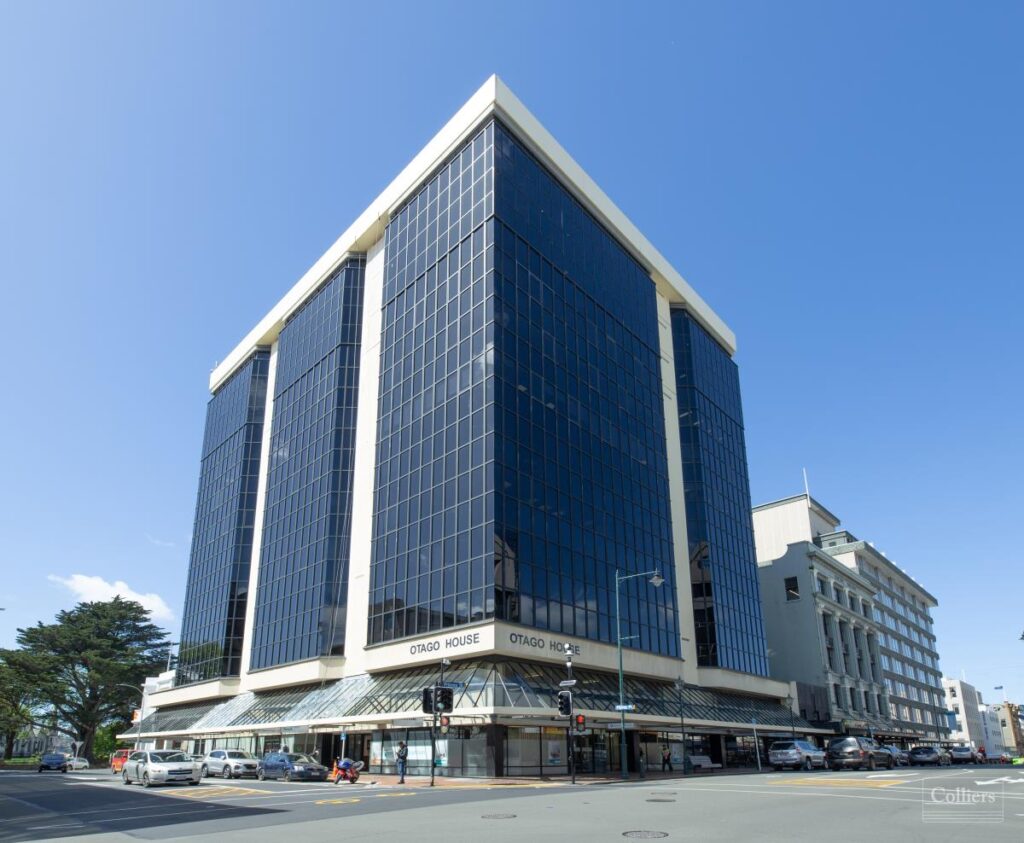
At the corner of Moray Place and Princes Street, Otago House rises above the Dunedin CBD with a presence that is both unmistakably modern and deeply connected to the city around it. Its reflective glass façade catches the changing southern light throughout the day, while the steady movement of people, traffic, and business below is a reminder that this intersection has long been one of Dunedin’s commercial crossroads.
Today, Otago House is recognised as one of the city’s leading commercial office buildings. Behind its contemporary exterior, however, lies a layered story of urban change, architectural ambition, and the continuing evolution of central Dunedin. For businesses, buildings of this kind offer more than office space alone; they also reflect continuity, confidence, and a lasting connection to place.
Key Takeaways / At a Glance
- Developed in the mid‑1980s during a period of commercial renewal in Dunedin
- Built on a site formerly occupied by historic hotel buildings
- Distinctive for its glass façade and scale within the CBD
- Has witnessed decades of change in Dunedin’s business and urban landscape
- Sits within a streetscape that reflects multiple layers of the city’s commercial history
Origins and Construction
The site occupied by Otago House has long been part of Dunedin’s commercial fabric. Earlier buildings on this corner included hotel premises that reflected the city’s nineteenth‑century growth, shaped by the prosperity that followed the Otago gold rush.
Historical records and local archives indicate that the site was successively associated with earlier hotel buildings, including the Glasgow Arms Hotel and later the City Hotel, both of which played a role in the life of central Dunedin.
The surrounding streetscape also speaks to Dunedin’s architectural heritage. Nearby stands the historic Masonic Lodge building on the corner of Burlington Street and Moray Place, another reminder of the city’s long‑standing civic and commercial history. Together, these neighbouring buildings highlight the contrast between Dunedin’s nineteenth‑century masonry architecture and the modern commercial developments that followed.
A New Chapter in the 1980s
Otago House itself began construction in 1986, and the original ten‑storey building was completed in 1987. Developed at a time when many New Zealand cities were modernising their commercial cores, the project marked a shift toward larger‑scale, contemporary office accommodation in Dunedin’s CBD.
The building was designed to meet the needs of modern business while reinforcing the role of the city centre as Dunedin’s commercial heart. At a time when many older urban buildings faced an uncertain future, Otago House signalled investment, confidence, and a forward‑looking vision for the city.
More than two decades later, the building evolved again, with three additional floors added between 2010 and 2011. This expansion strengthened its presence on the skyline and reflected its ongoing role within Dunedin’s commercial landscape.
What Otago House Represents Today
Otago House is not only part of Dunedin’s past; it remains firmly embedded in the city’s present commercial identity. In a CBD shaped by both heritage buildings and newer developments, it shows how modern office environments themselves become part of the urban story.
For organisations based in Dunedin, recognisable buildings carry a certain weight. They offer visibility, a sense of permanence, and a connection to the wider narrative of the city. In that respect, Otago House represents more than function alone; it reflects the kind of stable, well‑established environment that many professional firms, larger businesses, and institutions value in a central business address.
Architectural Character
Otago House stands apart from many surrounding CBD buildings through its distinctly late twentieth‑century commercial design. Where much of central Dunedin is defined by ornate Victorian and Edwardian stone architecture, Otago House reflects a different chapter in the city’s development, one centred on modernity, efficiency, and contemporary business requirements.
Its glass façade, clean vertical lines, and substantial scale create a clear visual contrast with the historic masonry buildings that characterise much of Princes Street and the nearby Exchange precinct. Rather than competing with Dunedin’s heritage architecture, the building adds the next layer in the city’s architectural story, showing how the CBD continued to evolve commercially into the 1980s and beyond.
Its corner position is central to its identity. Viewed from Moray Place, Princes Street, or the approach toward the Octagon, Otago House commands attention in a way few office buildings in Dunedin do. Its height and reflective exterior give it a recognisable presence within the cityscape, particularly as light and weather shift across the day and seasons.
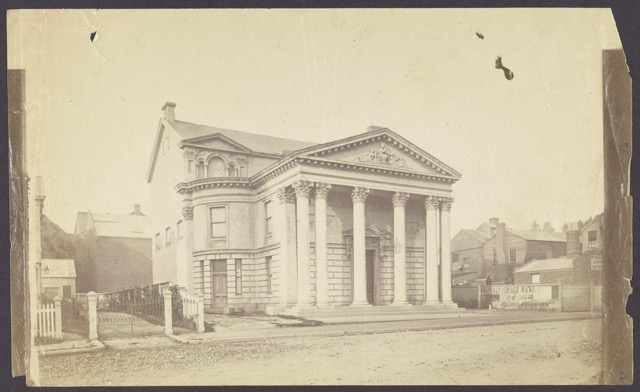
Masonic Hall, Moray Place (1870s). Hocken Digital Collections, accessed 04/06/2026
A Building That Has Seen Dunedin Grow
Changing City, Constant Landmark
Since its completion in 1987, Otago House has seen decades of change in Dunedin’s CBD. The city around it has moved through economic cycles, retail shifts, urban renewal, and changing workplace expectations, yet the building has remained a constant part of the commercial landscape.
Over time, Dunedin has strengthened its identity as a university city, a professional services centre, and a hub for regional business. Streets once dominated by warehouses and trading firms have adapted to new industries, technologies, and ways of working.
Part of the City’s Daily Rhythm
Through these changes, Otago House has stayed connected to the rhythm of the city: housing businesses, welcoming workers and visitors, and continuing the long commercial history of the site itself.
In many ways, the story of Otago House mirrors the story of Dunedin — a city that values its heritage while continuing to adapt, invest, and evolve.
Looking Ahead
Landmark buildings earn their place not only through age, but through continued relevance. Otago House remains part of Dunedin’s working city: visible, active, and tied to the life of the CBD each day.
As Dunedin continues to evolve, buildings such as Otago House help link the city’s commercial past with its future. For organisations seeking to be part of that ongoing story, it remains one of the most recognisable business addresses in central Dunedin.
Learn more about Otago House, its place within Dunedin’s CBD, and current office opportunities by visiting the Otago House section of the NZ Moray Property Ltd. website.
Conclusion
Otago House is more than a commercial office building. It is part of a wider Dunedin story shaped by ambition, reinvention, and the enduring importance of the city centre. Its presence on the corner of Moray Place and Princes Street reflects both the history of the site and the continuing role of well‑positioned commercial buildings in Dunedin today.